
Travel Tips, Photoshoot Planning, and What to Know Before You Go
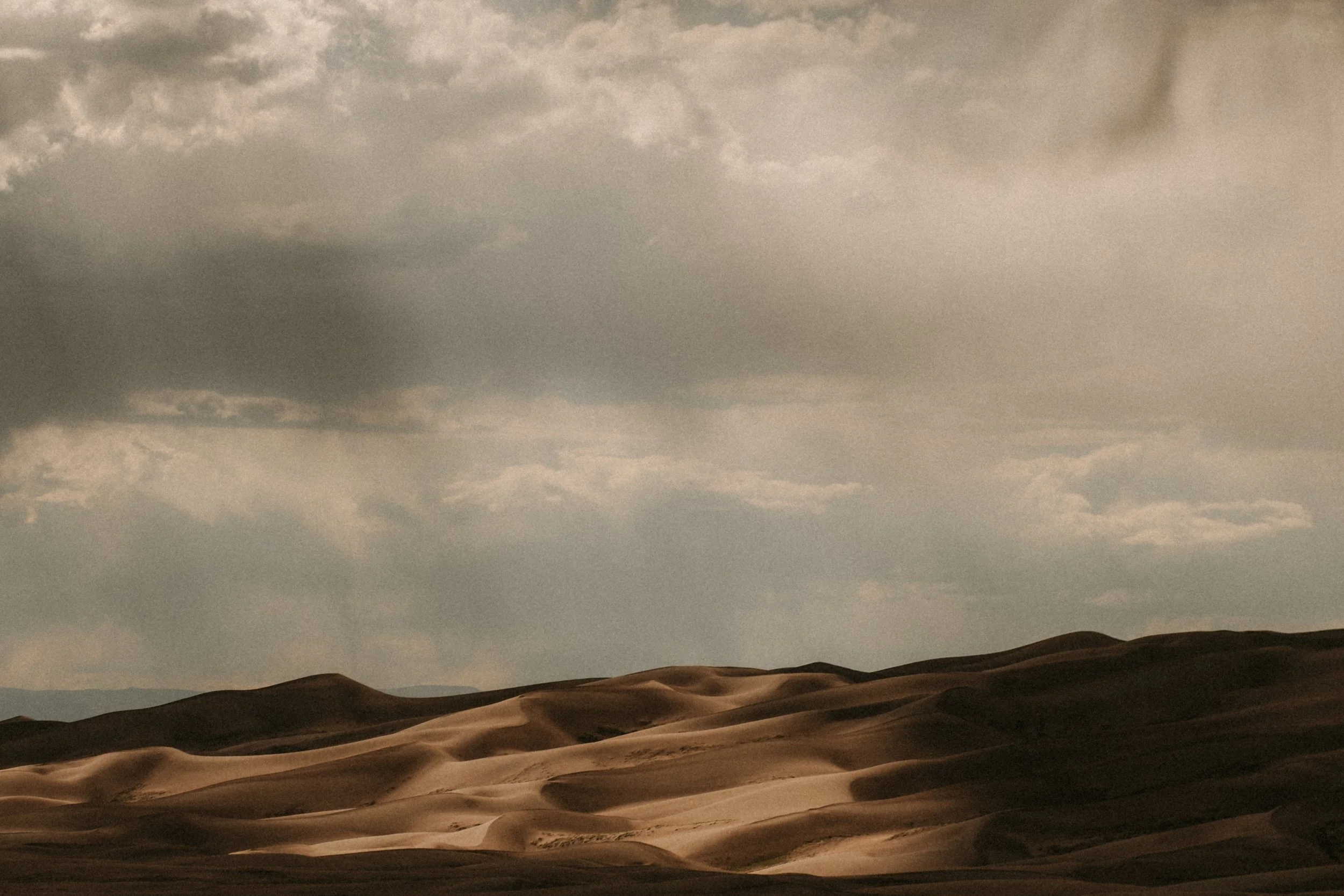
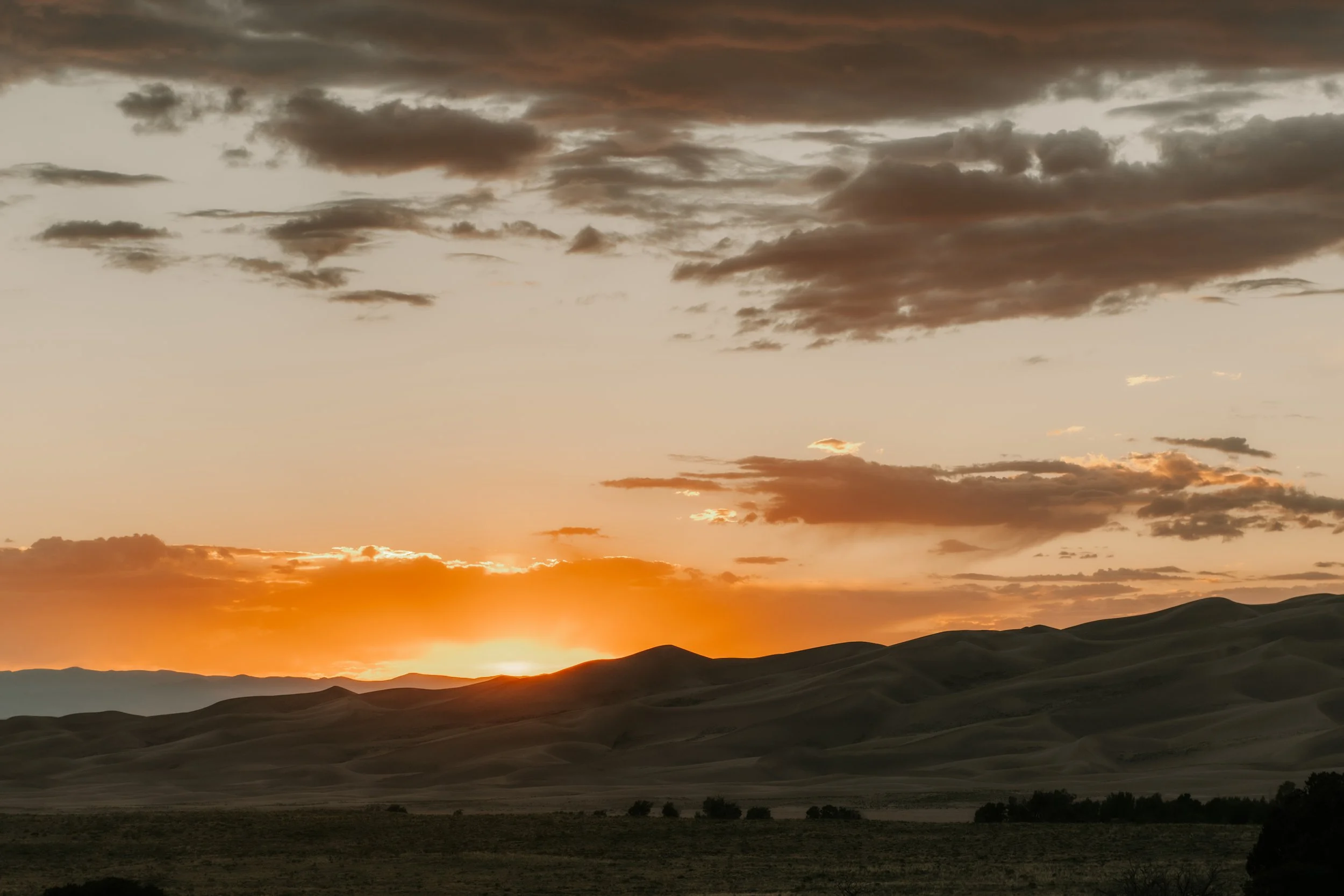
There are some landscapes that feel beautiful, and then there are others that feel almost unreal. Great Sand Dunes National Park & Preserve is one of those places. The scale is hard to understand until you are standing in it, watching wind carve fresh lines into the sand while the Sangre de Cristo Mountains rise in the distance. It is home to the tallest dunes in North America, and for photographers, it offers a mix of minimalism, movement, texture, and light that is hard to find anywhere else.
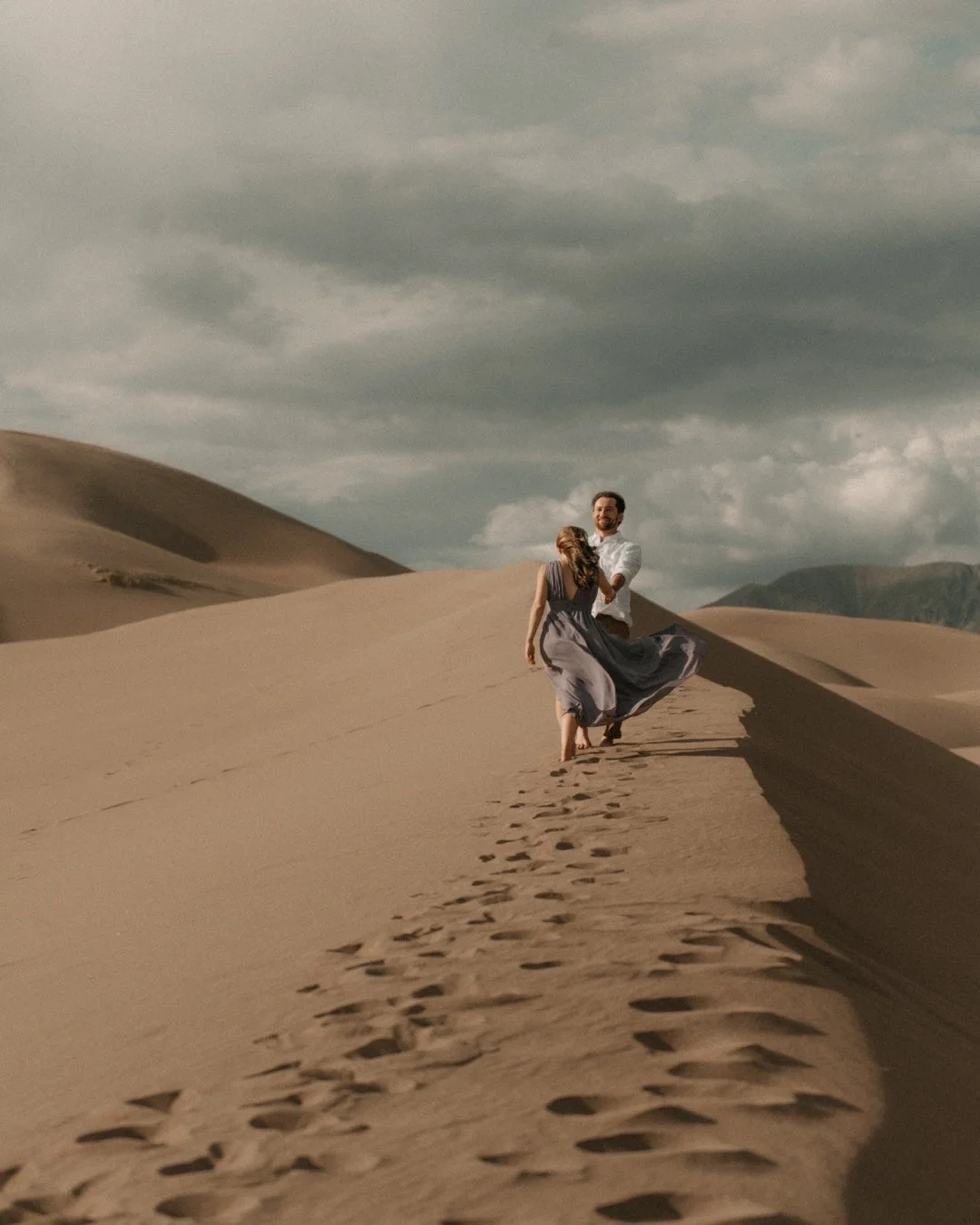
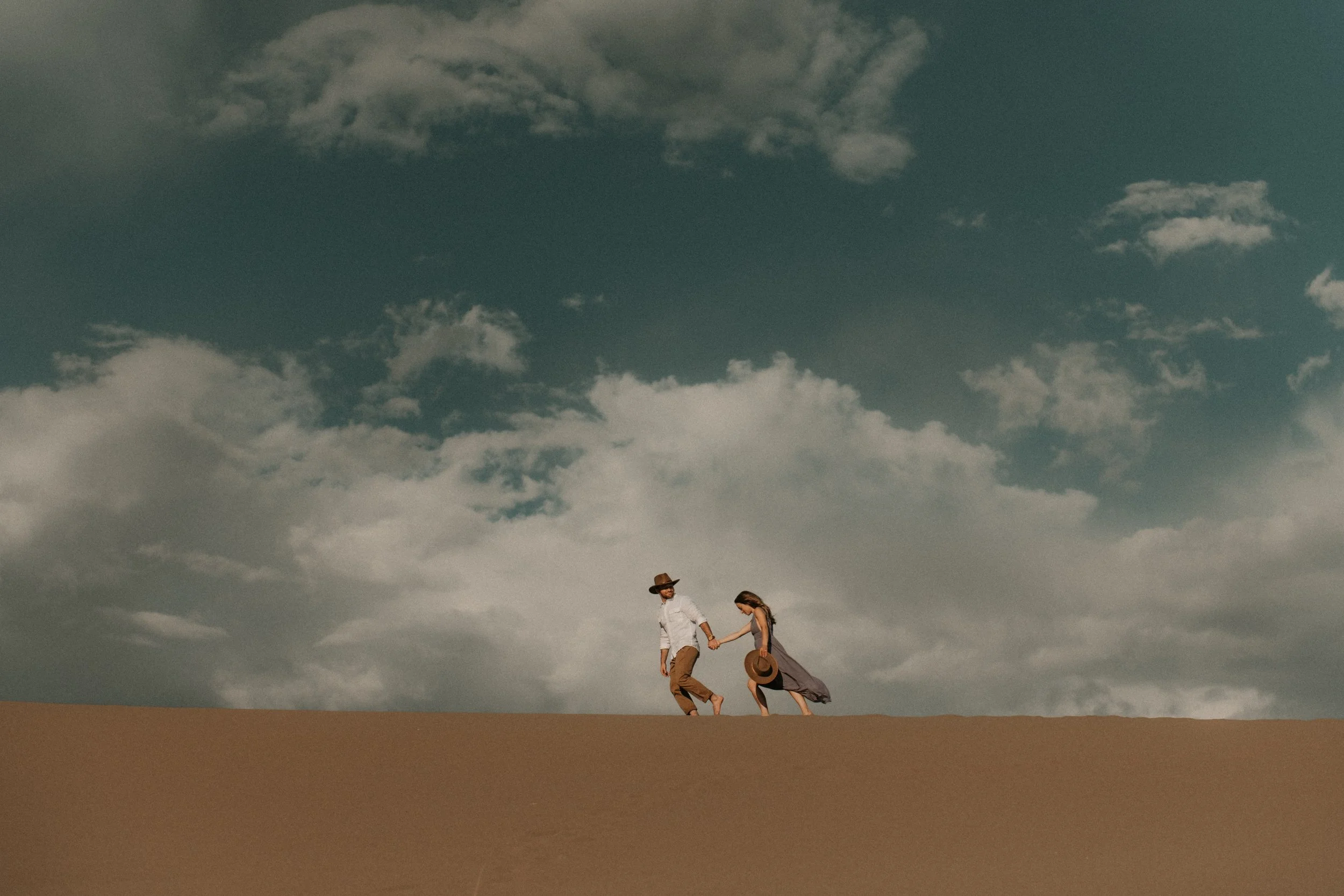
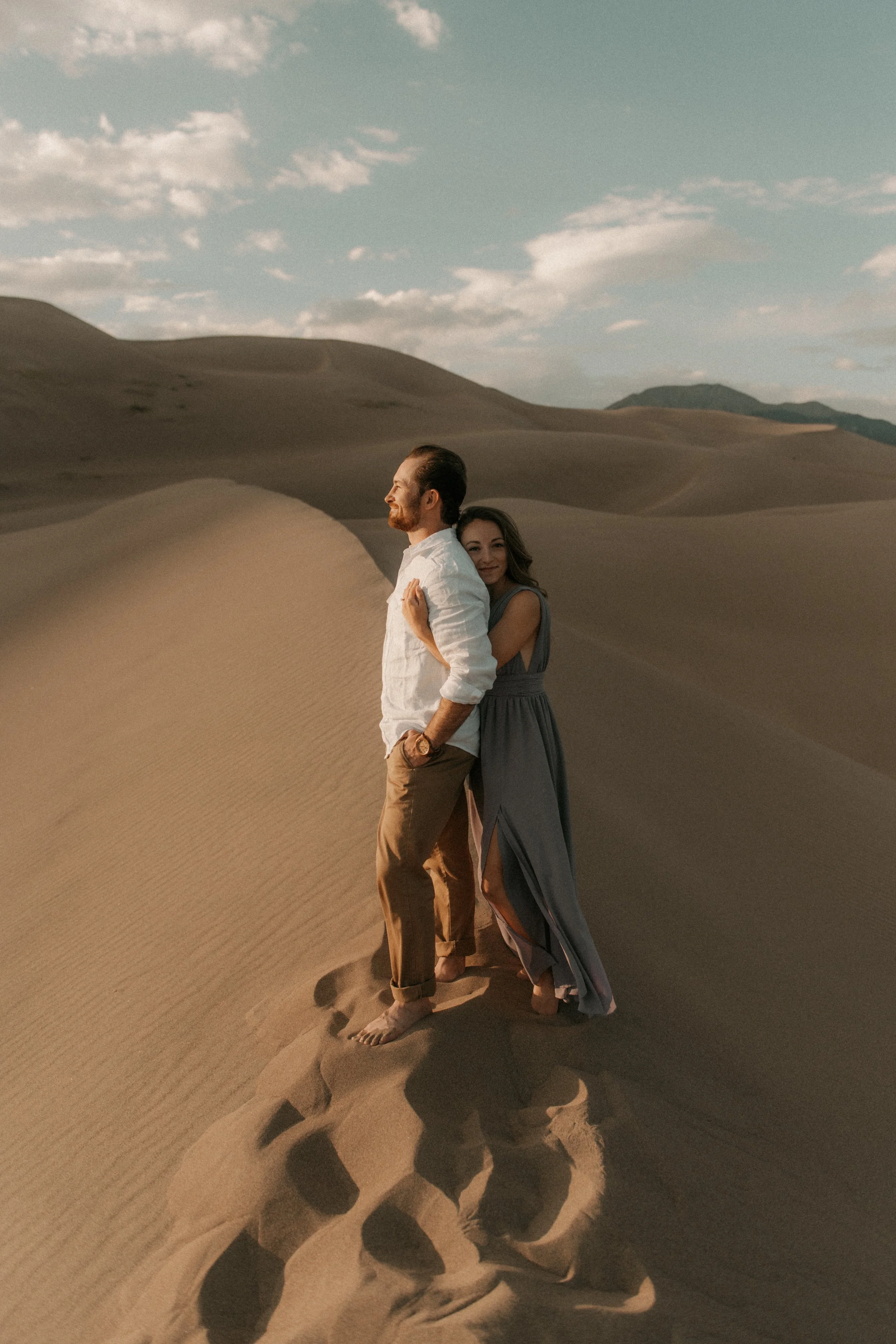
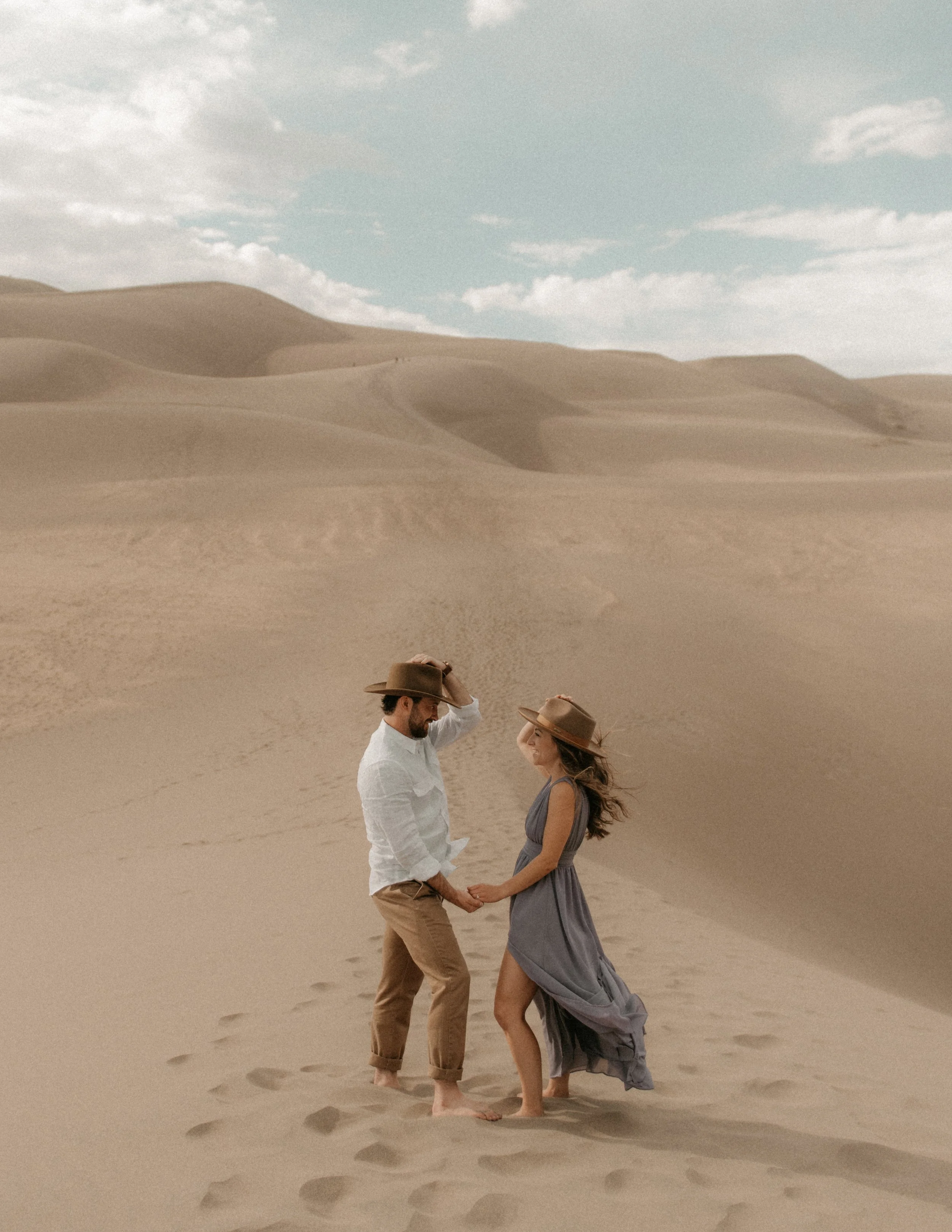
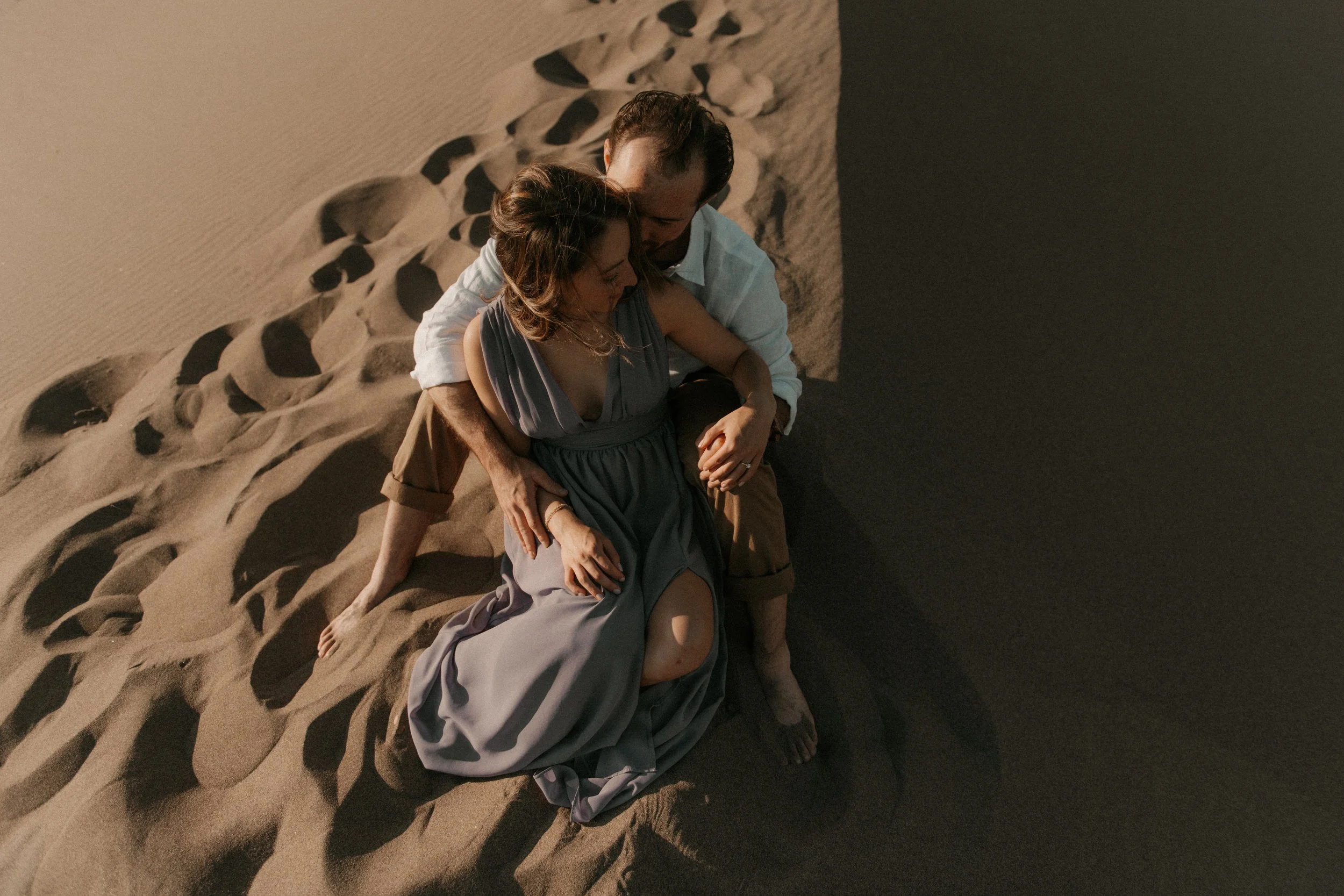
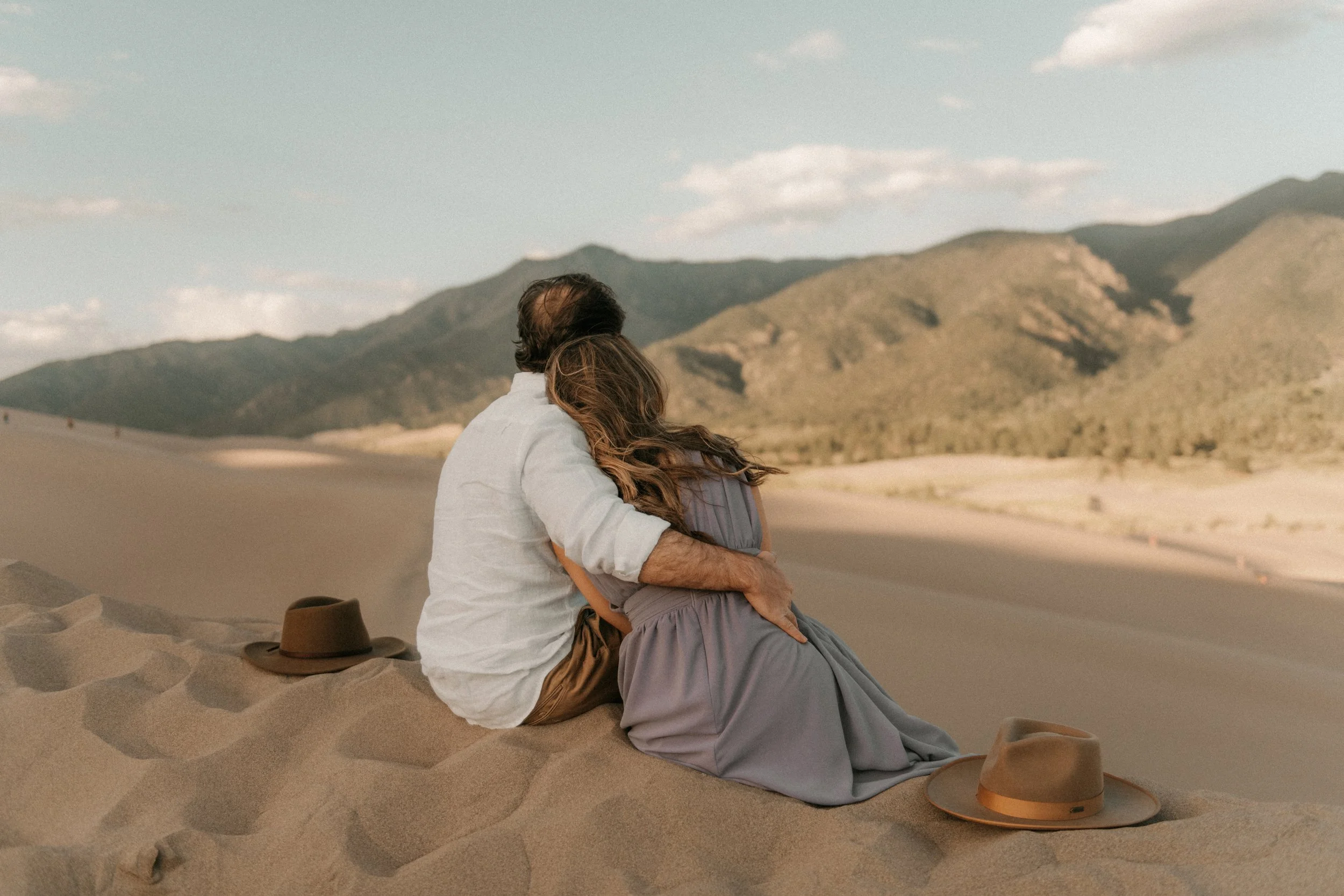
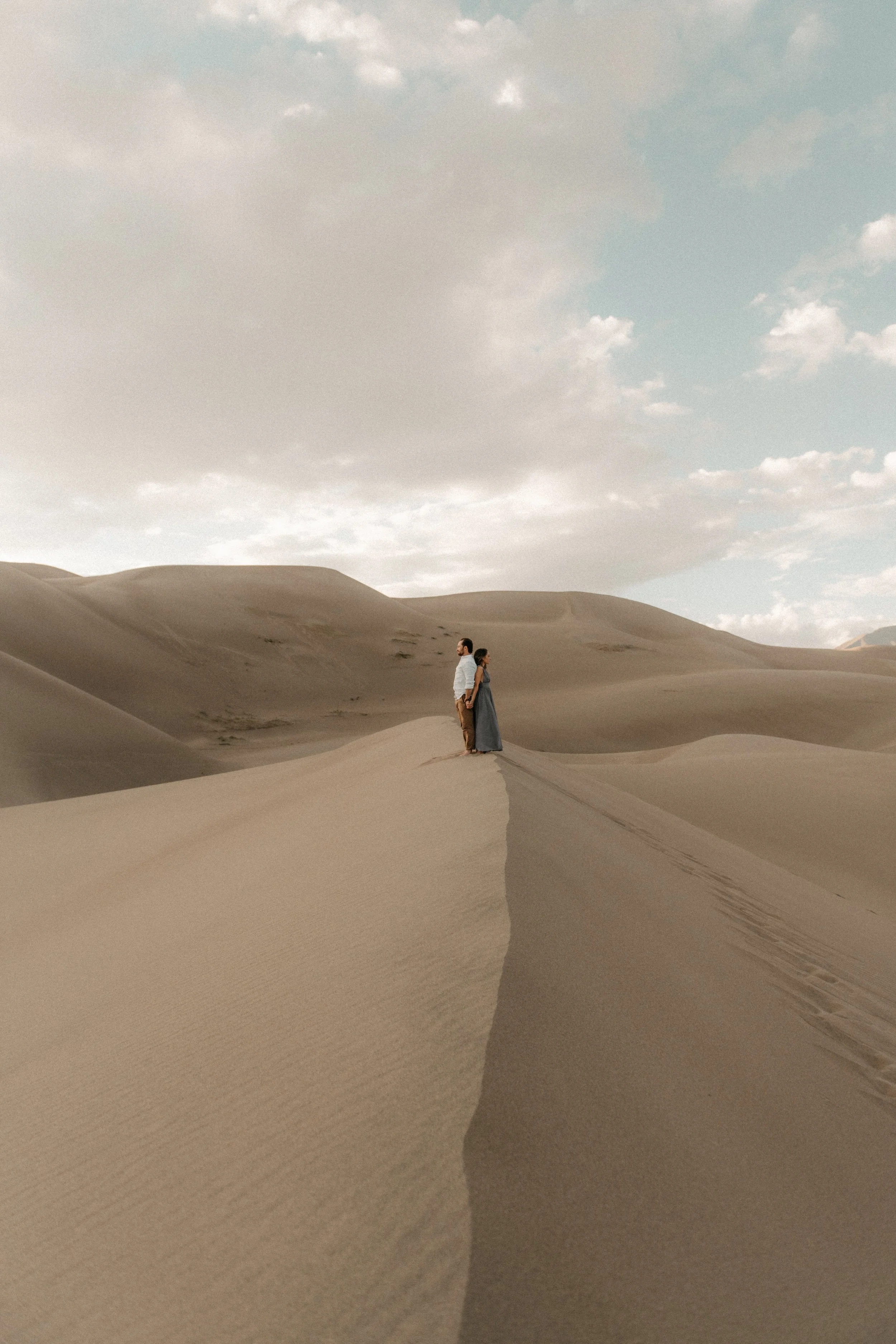
This session at Great Sand Dunes was exactly why I love photographing in places like this. The wide ridge lines, the dramatic cloud cover, the soft earth tones, and the way the dunes seem to swallow everything around you made every frame feel cinematic. Some of my favorite images from this shoot came from leaning into the scale of the landscape, letting the people feel small in the frame, and then contrasting that with intimate black and white closeups that felt quiet and personal.
One of the best things about planning a shoot here is that the park is open 24 hours a day, year round, and there is no timed-entry reservation system. That makes sunrise and sunset sessions much easier to plan, and it also opens the door for blue hour and night photography if you want to stay longer. The park is also recognized as an International Dark Sky Park, so if you are building a full photography trip instead of a quick stop, staying overnight can be worth it.
Traveling to Great Sand Dunes National Park
Great Sand Dunes feels remote because it is. The main access to the park is by Highway 150 from the south or County Road 6 from the west, and the National Park Service specifically warns drivers not to rely blindly on computer mapping programs in this area because some routes can send visitors onto hiking trails or rough 4WD roads. If you are flying in, the closest commercial airport is in Alamosa, about 38 miles away. Alamosa is also the best nearby town for stocking up before your session day.
It is smart to arrive with food, water, and a fully charged phone before heading into the park. Cell service is limited, there is no wi-fi in or near the park, and the Oasis Restaurant and Store near the entrance is the only restaurant within 20 miles and is typically seasonal. That means a little extra planning goes a long way, especially if you are shooting sunrise, sunset, or spending several hours out on the dunes.
Planning a Photoshoot at the Dunes
The closest parking to the dunefield is the Dunes Parking Area, which is about one mile north of the visitor center. From there, getting up into the dunes is not a quick stroll. For a real photoshoot, especially one with wardrobe, water, camera gear, and stops along the way, I would plan on roughly an hour from parking to being fully up in the dunes and ready to shoot. There are no formal trails in the dunefield, so part of the experience is choosing your own path and working your way up the ridgelines.
If your goal is beautiful light and cleaner sand patterns, earlier is almost always better. Spring afternoons are often windy, and in warmer months the sand can reach surface temperatures of around 150°F. The park also warns about afternoon thunderstorms and lightning in summer. For both safety and aesthetics, sunrise and sunset are the best windows. If you are photographing during late May or early June because you want Medano Creek in the foreground, know that this is usually peak creek season and also one of the busiest times in the park, so weekday sessions are the better choice whenever possible.
Permits, Weddings, and Commercial Photography
Permit rules at national parks can be confusing, so this is the part I would always double-check before booking. As of current NPS guidance for Great Sand Dunes, filming, still photography, or audio recording involving eight or fewer people usually does not require a permit if it stays in public areas, uses hand-carried equipment only, does not require exclusive use of a site, does not impact park resources or other visitors, and does not create extra administrative cost for the park.
Ceremonies are a different category. If you are planning an elopement, vow exchange, or wedding ceremony inside the park, the NPS says all ceremonies require a Special Use Permit regardless of size. The current park page also lists a nonrefundable $200 application fee, notes that applications can be submitted beginning January 1 of the event year and no later than seven days before the event, and explains that drones are prohibited. If you are a photographer offering paid visitor services, workshops, or guided commercial activity in the park, review Commercial Use Authorization requirements with the park before you book.
Wind, Sand, and Protecting Your Gear
The dunes are beautiful, but they are not gentle on camera gear. Wind can come up fast, and once sand starts moving it gets into everything.
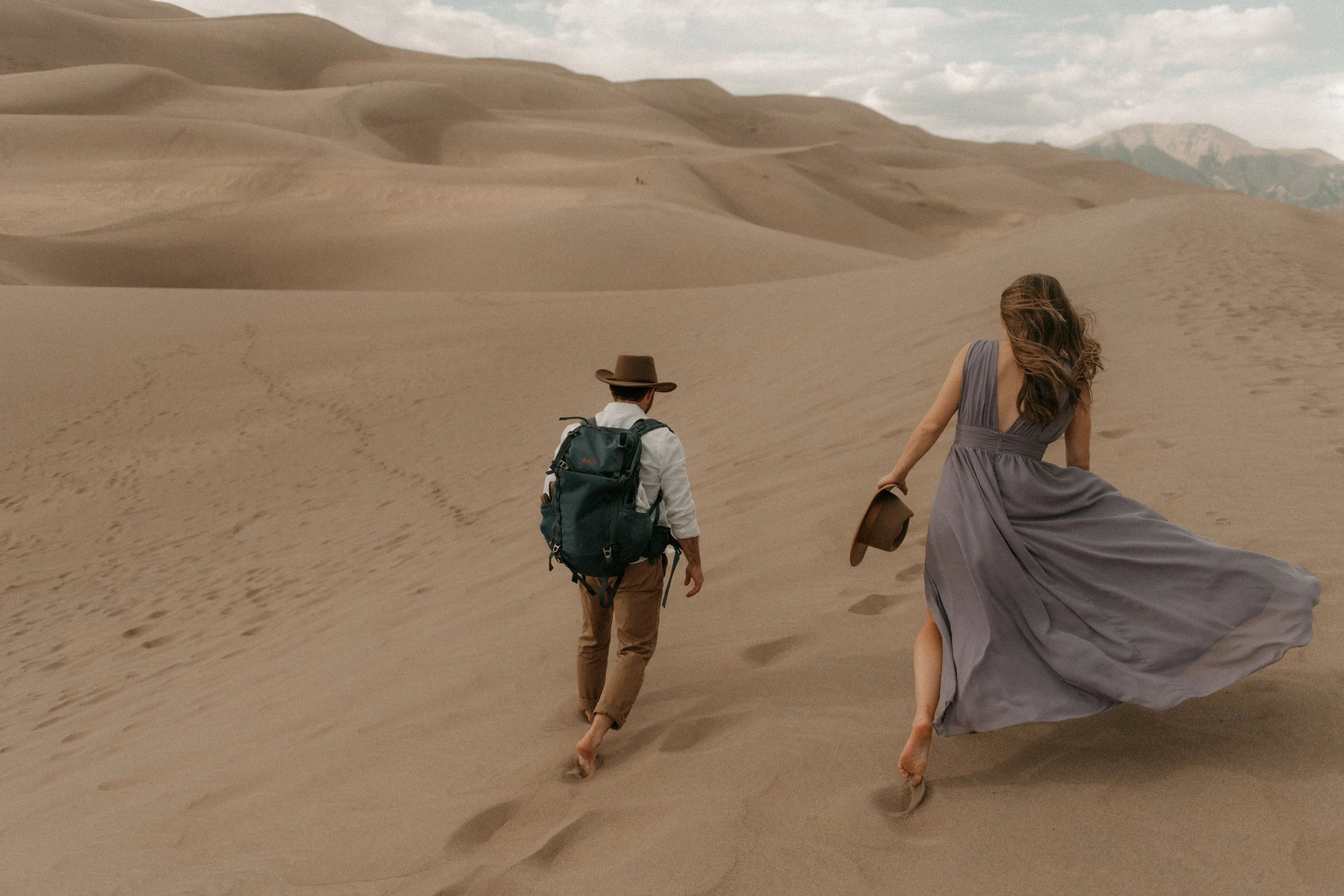
My approach here is simple. Bring as little gear as you can get away with. If possible, work with one camera body and one primary lens so you are not changing lenses in the middle of the dunes. Keep anything you are not actively using zipped inside your bag. Store extra batteries, cards, and accessories in sealed pouches. If the wind starts really moving, throw a rain cover or even a clean plastic cover over the camera between shots. Carry a blower, a soft brush, and microfiber cloths, and wait until you are back in a calmer environment before doing a more thorough cleanup.
I also try not to set gear directly on the sand unless I absolutely have to. If I open a bag, I turn my back to the wind first. If I do need to swap something, I do it quickly and keep the opening shielded. A little caution out here saves a lot of cleanup later.
What to Wear and Bring
For clients, flowy fabrics photograph beautifully here because the wind becomes part of the image. Neutral tones, earth tones, soft blues, and muted lavenders work especially well against the dunes. Bare feet can look great, but only if the sand temperature is safe. If you are hiking farther in, practical footwear for the walk and then changing once you are in position is often the best move.
I would also bring more water than you think you need, a towel if Medano Creek is flowing, simple snacks, and layers. Conditions can shift quickly, especially in shoulder seasons. The landscape looks soft, but the environment is still rugged.
This Place Is So Worth ALL THE PLANNING!
Great Sand Dunes is not the kind of location where you roll out of the car and immediately start shooting. It asks more of you. More walking, more planning, more awareness of weather, more respect for the landscape. But that is also exactly what makes it so special.
The reward is a location that feels expansive, clean, and completely unlike anywhere else in Colorado. If you want photos that feel adventurous, intimate, and rooted in the landscape, this place delivers in a huge way.
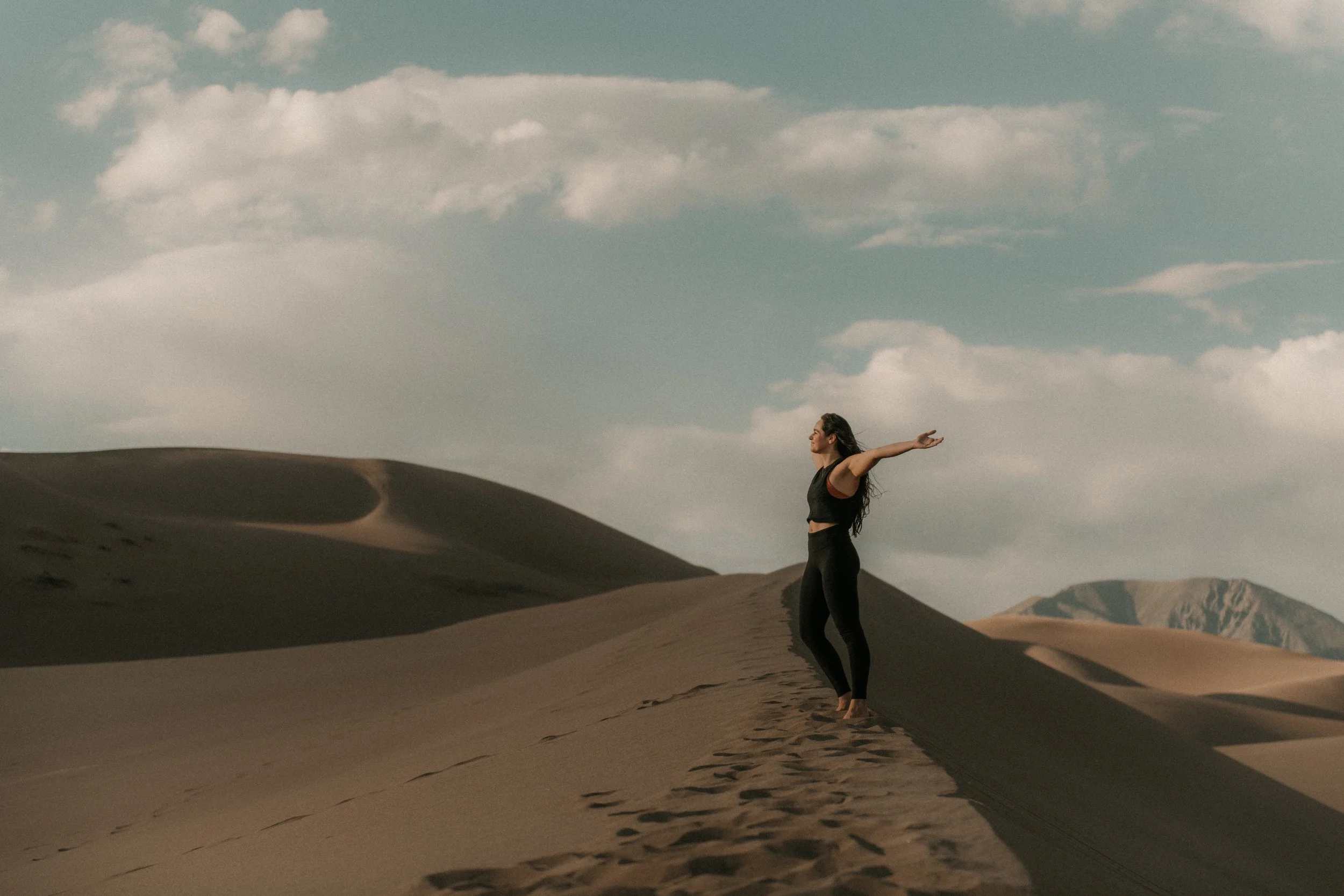
Interested in booking a photoshoot or elopement in the Great Sand Dunes National Park, with me as your photographer? I would LOVE to help you plan this adventure!